For centuries, art has been used as a form of expression of human passions and lived experiences, and that is precisely what made art art. The ability to transpose ideas into words, images into paintings and tunes into music was a definitive factor which separated humankind from all of the other species. Nonetheless, with the digitalisation of the modern world in the past decades, our relationship to art and music has shifted; photography deemed painting a little less necessary, and now the little camera in our phones allows everyone to capture a beautiful moment in real time. Similarly, with the emergence of other forms of media, literature has declined in popularity, shifting amid a growing preference for visual media, yet it remains a pillar of any society’s culture.
Now, the Artificial Intelligence (AI) bubble has been growing for the past few years, and the excitement with which it has been greeted much resembles the release of the first touch-screen iPhone. As Generative AI, or GenAI, becomes increasingly embedded in our daily lives, through large language models such as OpenAI’s ChatGPT or image generators like Google’s Gemini, we must pause for a moment and reflect on how these changes affect the world of art and literature. Will the world of arts ever be the same? Will originality even be a prerequisite for creating in the future?
The prospects, at the moment, argue against it. Up until now, creating, whether it be art or literature, has required a certain amount of originality and creativity – poems, paintings, novels, they were all the result of hard work combined with great ideas. Now, anyone can become a great writer, a great artist, or even a great musician, all with the help of pressing one button. As the AI-produced song “I Run” reached the charts this year, it became obvious that human efforts are no longer necessary in producing art. Authors are increasingly using AI in the creative writing process to help produce novels; nonetheless, how creative and innovative can something plagiarised be?
One of the main issues with large language models (LLMs) is that the vast data they provide users with is collected from everything already available on the web; the rules of copyright are dismissed, as these AI tools statistically collect all of the available information they can retrieve from the World Wide Web. Therefore, the poem you wrote for your high school newspaper or the book you published twenty years ago could now be used to fuel someone else’s creation, without either of the parties being actively aware of it. This economy of recycling ideas or works will inevitably lead to a decrease in true originality; AI cannot create anything new – it can only offer something which already exists.
Similarly, as any image can be generated now within seconds, artistic talent will be deemed unnecessary. Why would anyone spend hours hand-drawing scenery when AI can do it within seconds, just the same? What will it mean for artists when anyone can replicate their efforts, hard work and talent? The creation of “Ai-Da”, the first humanoid robot that creates art, pushes these questions even further – is art made by something not human still art? Trained on AI algorithms and equipped with computer vision, Ai-Da is advertised on the official website as “a performance artist, designer and poet”. As her fingers hold a pencil and draw on a piece of canvas, her works are being sold for millions, while human artists all over the world struggle to sell their pieces of art, tainted and stained by their blood, sweat and tears and drenched in human inspiration and creativity.
It is irrefutable, however, that AI has the power to expand creativity beyond the bounds established until the present moment. Creative Adversarial Networks, also known as CANs, build on generative models and retrain them in order to deviate from the common patterns, and they aim to create original, novel content which can still be considered as art. Besides such innovations, AI can be used to push individual boundaries – artists such as Sougwen Chang are training their own AI algorithms and feeding them her previous works in order to generate new works based on what she has already created. Therefore, it is patent that Artificial Intelligence has the power to expand creativity positively; the main debate remains on how it is used by the general population.
The AI bubble might pop any day now, changing the world, especially the creative spheres, even more than it already has. The need to rethink how we use such algorithms is more salient now than ever – will we allow them to take over our creativity by becoming overly reliant on them to generate so-called “new” ideas, or will we be able to set boundaries in order to preserve our humanity? I remain a strong advocate of preserving our human-exclusive abilities of generating new ideas creatively and innovatively, and in maintaining art and literature that which they have been until now – a humane form of expression, an amalgamation of our experiences and passions, and a form of connection and bonding with one another.
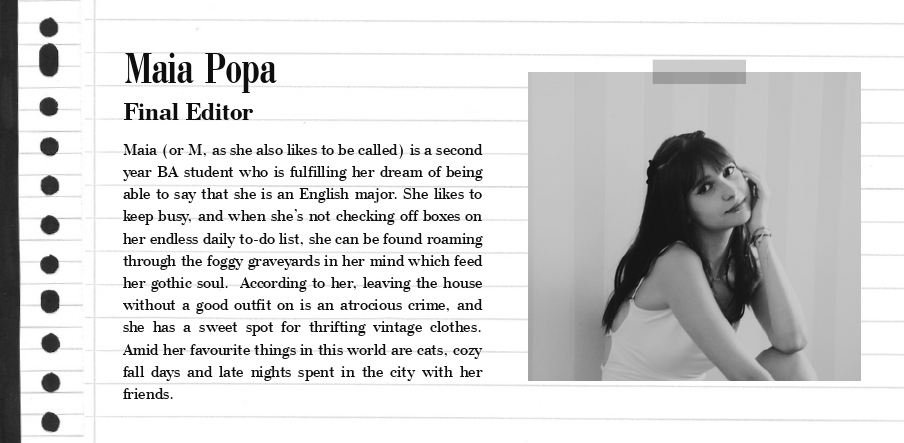
Written by Maia Popa
References:
https://www.bbc.com/future/article/20241018-ai-art-the-end-of-creativity-or-a-new-movement
https://arxiv.org/abs/1706.07068


Leave a Reply