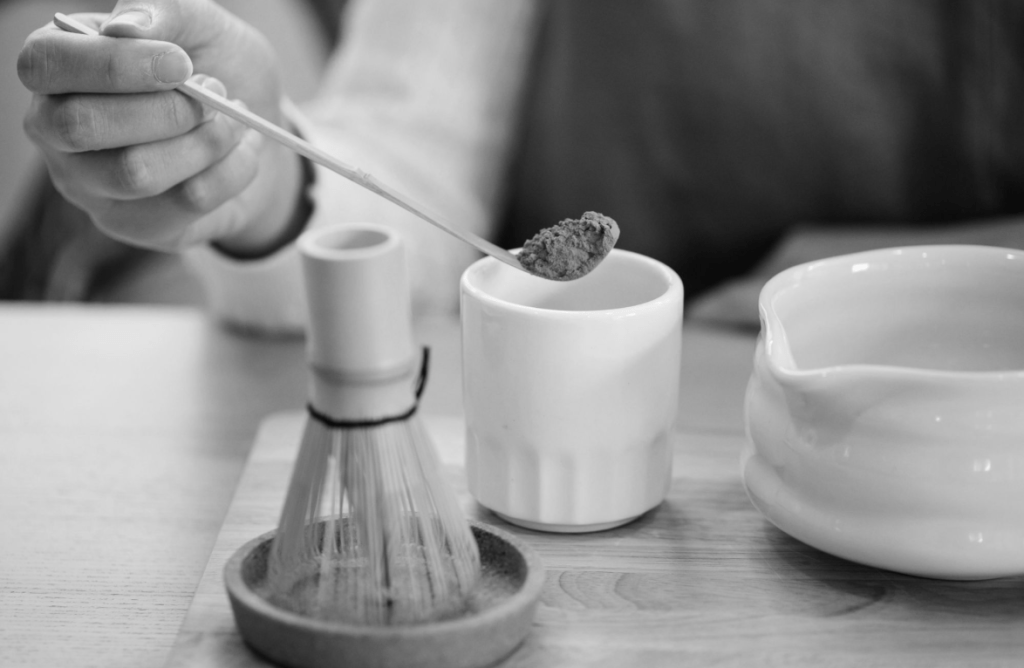
Matcha. That green powder mixed with milk to make the perfectly aesthetic matcha latte, the mochi, the ice cream, the chocolate, the cakes, the cookies, the face masks, the lip balms. Matcha, that vibrant green substance, has become a social signifier for a Pinterest aesthetic, a soft-pink-pilates-girl lifestyle. It is not only omnipresent, but it is also incredibly expensive and rising in price by the year, becoming a status symbol and luxury accessory. To anyone who does not know anything about matcha, it is an expensive, green trend that tastes like grass and will be over soon. A trend that represents a certain type of person. In my experience, avid coffee lovers are usually suspicious of matcha due to its unfamiliar or weird taste and pretentious reputation. Yet, I do believe there is more to matcha, to the process of its production and consumption, going beyond hype and stereotypes. I am here to explain what matcha is, which legacy it bears, what the health benefits actually are, why it is so hyped and why it is so damn expensive. I began drinking matcha because I had gastritis and ongoing migraines, which were both aggravated by coffee. And while I did love coffee, I stuck with matcha for its taste, its physical effect, its health benefits and its ritualistic history. If you are curious about the origins of matcha, willing to learn the truth about it beyond its hype, or if you want to finally try matcha but do not know where to begin, I have become somewhat of a matcha-nerd in recent years, and I am happy to share what I have gathered about its origin.
What is Matcha? A Delicate Process
What exactly is matcha? Isn’t it just green tea? And how is it produced?
Matcha is the finished product of a long and complex process of harvesting, steaming, drying, sorting, and stone-grinding leaves of the green tea leaf plant (Camellia sinensis), which is the same plant that produces white, black and green tea for regular infused consumption. While the origins of matcha began in China, as I will explain later, the present-day product and most of its (cultural) history are anchored in Japan, with the prominent regions of production being Uji, Yame, Kagoshima, Nishio and Shizuoka. Let us walk through the steps of its production one by one:
- The green tea leaf plants grow in Japan and are very climate sensitive. A harvest usually happens one to two times per year (with a maximum of four times), and the first harvest in the springtime is called the ‘first flush’, producing the highest quality of leaves. Each subsequent harvest (usually happening from spring to early autumn) provides a harvest with lower quality but higher quantity, producing leaves for different purposes (which I will elaborate more on later).
- The key step, which distinguishes matcha harvest from any other tea-leaf harvest, is the shading of the plants. Three to four weeks before harvest, screens are set over the plants so that they remain shade-grown. This is a fundamental step in the process, which reduces the impact of sunlight on the plants. This shading enhances colour, texture, flavour and induces further health benefits of the plants. The UV control protects the leaves from over-oxidising and promotes the production of chlorophyll (a byproduct of photosynthesis responsible for the vibrant green colour). Additionally, the shading provides optimal conditions for amino acid production (the most prominent one being l-theanine), which are mostly responsible for the flavour profile and health benefits in matcha.
- When it is time for the first flush, only the newest and top two leaves are picked from each strand. This used to happen manually, while present-day farmers have industrialised their harvest with the help of machines. The latter rounds of harvest later in the year provide the lower, older leaves, which are less vibrant in colour, harder in texture and different in flavour.
- After the harvest, the first flush is brought to processing facilities, where the first step is to wash the leaves. After washing, the leaves are settled (making them lie flat and facing one direction) and partially sorted. At this stage, the leaves are called ‘aracha’, or ‘crude and undefined tea leaves’.
- Next, the leaves are steamed as soon as possible to stop any oxidation. This preserves the vibrancy of colour during further processing. If this step were to be skipped, the leaves would soon turn brown, and we wouldn’t have the dark green colour of the end product as we know it.
- Now, the leaves are ready to be dried and, due to their dry condition, it is easy to finally remove all leftover stems and veins. What is left is the dried residue of the pure leaf. These flat, dried leaves are called ‘tencha’.
- Lastly, the ‘tencha’ are then milled into a fine powder called ‘matcha’, which we know from our canned tins at home. Traditionally, this happens with an actual stone grinder, which is the purest form of grinding, providing the finest powder. However, these stone mills can grind a dizzying 40 grams per hour (!!), which is why they are slowing down production and sometimes substituted with faster and easier forms of mechanical grinding, even if that leaves a mark on the quality of the powder.
The final product is packed and exported, delivered into our favourite cafes or directly into our homes. In the next section, I will focus on the differences between grades of matcha, as there are worlds between them. Just because something is labelled as matcha (and sold for a high price) doesn’t mean it guarantees high quality.
Grades of Matcha: ‘Ceremonial’, ‘Culinary’ and Everything Between
So, if you have ever heard about matcha and have tried it (or tried to buy it somewhere before), you might have come across the terms ‘culinary’ and ‘ceremonial’ grade. Essentially, these terms were originally ascribed to determine the quality of any powder, as there are undeniable differences between different harvests. Yet, these terms were invented and popularised within the Western hemisphere, allegedly in 2007 by a Canadian company selling matcha. It might surprise you to know that ‘ceremonial’ or ‘culinary’ does not mean anything in Japan. If you visit matcha birthplaces like Kyoto and family-owned businesses which have persisted for one or two centuries, you will notice that there is no universal grading system for matcha kinds or qualities that is applicable across companies. As it turns out, each company usually has a unique grading system, with some manufacturers offering a 1-10 bitterness or taste scale and others choosing a light-medium-rich taste approach. Here in the West, however, we come across two sole categories which comprise a variety of qualities that can hardly be split into two. This is why there are extreme differences between various products labelled ‘ceremonial’. Generally, however, the distinction between ‘ceremonial’ and ‘culinary’ grade is guiding to find what you are looking for. The ‘ceremonial’ matcha category usually labels higher-quality matcha from the first flush. Because the top leaves are harvested first, the end product is much richer in taste, with a naturally sweet, umami undertone due to a higher concentration of amino acids. It generally has a smoother texture due to finer grinding and a vibrant green colour, depending on region and variety. Because of the distinction in taste and texture, this matcha is made for pure consumption without additives, milk or sugar. This is the kind of matcha used in traditional Japanese tea ceremonies (also called ‘chanoyn’), therefore the name ‘ceremonial’. During tea ceremonies, matcha has been prepared in either of two ways: either as a thick ‘koicha’ tea, which is more matcha powder and less water, whisked to make a soup or paste-like drink; or as ‘usuche’ tea, which has less matcha and more water to thin it into a liquid. Because this matcha can only be harvested from a plant once a year, and because of the production and quality, this matcha is the most expensive, ranging from 0.25-0.7€/1g.
In contrast, ‘culinary’ grade refers to the blend of the second, third and fourth rounds of harvest. The leaves picked from the bottom of the tea plant are darker, thicker, and, due to less sun exposure, lower in amino acids and antioxidants. When processed into matcha, the leaves have a naturally bitter taste, are usually ground more coarsely, and have a less vibrant, grey, brown or faded green colour. Because these leaves are lower in quality and more plentiful during harvest, this matcha is much less expensive, sometimes at a fraction of the price (about less than a cent per gram) of ‘ceremonial’ grade matcha. This matcha is normally restricted to culinary use only, because it is combined with sugar, milk and other aromas in cakes, ice cream or cookies. Yet, while this variety is intended for cooking and baking purposes only, many cafes and restaurants are willing to step on the matcha-trend-train by buying the cheapest one they can find and selling it for the same price as ‘ceremonial’ matcha. Usually, people who are not matcha enthusiasts do not know about this distinction, and so they do not see a problem with it. But you can taste and feel the difference, especially when it comes to the so-called ‘health benefits’ matcha entails.
To summarise, while we use ‘ceremonial’ and ‘culinary’ as common labels when navigating the matcha market here in the West, there is no guarantee for quality when buying the former, because there is no standardised system for quality control. It can usually be assumed, though, that ‘ceremonial’ is of a higher quality and is pricier than the ‘culinary’ grade. But, as I said, the health benefits depend on the variety.
Health Benefits and Matcha Myths
Matcha was one of the products gaining attention during the ‘Super-Food’ hype in Western Health Culture. It looked healthy, because it was green, promised health, because it tasted earthy, and was advertised as a fat-loss, heart-health, mineral supplement. I remember that before I knew what matcha was and where I could get it, my grandma had a bag at home. When I noticed it and asked her what it was, she said it is a green powder she drinks for her health, skin and metabolism. About two years later, when I tried matcha and learned about its origins and benefits, I asked her if she still had it, was still drinking it and if she had ever tried mixing it with a bamboo whisk. My grandpa, who overheard our conversation, fell into a violent fit of laughter because he had never heard the term ‘bamboo-whisk’ before. My grandma just said that she didn’t like the taste and ditched the bag after a month or so of trying. Anyways, my point is that matcha is advertised as a superfood and as super healthy.
The health benefits associated with matcha originate from three sources: the plant, its cultivation, and its consumption. The plentitude and effectiveness of any health benefits depend on the quality of matcha. Yet, when we talk about the highest quality (labelled ‘ceremonial’ grade), the health benefits include higher amino acid content, a balanced caffeine push and antioxidants. The screening of the leaves a few weeks before harvest increases the quantity of amino acids in the leaves. Amino acids are organic building blocks which can be combined to form proteins. Proteins then become the key factor in muscle building, enzyme function, metabolic health, immune function, and hormone production or regulation. One of the amino acids highly present in matcha due to the shading is L-theanine. L-theanine is responsible for a stronger umami taste, but more importantly, L-theanine can cross the blood-brain barrier and thereby impact hormone production. Generally, there has not been much or sufficient research on the compound. Yet, it is believed to induce alpha brain waves, which support an alert but relaxed state of mind. Additionally, we have learned that matcha stems from the same tea plant that produces other green, white and black tea varieties. However, because it is the entire leaf ground into a fine powder, it has a different caffeine content than other teas, which are infused. Matcha has more caffeine than green tea, but less caffeine than coffee. The combination of caffeine and L-theanine in the green powder creates a steadier caffeine curve without a significant crash and a calmer experience of focus, usually without jitters, migraines or anxiety. Lastly, the tea leaves produce polyphenols, specifically catechins, which have anti-oxidative, anti-microbial and anti-inflammatory properties. Due to the consumption of the whole leaf, this content is up to three times higher than in regular green tea and has beneficial effects on heart health and general cell decay within the body. Again, all the research points with force towards the need for more, independent and longitudinal studies. Yet, we can say that there is merit in the health benefits of matcha. However, if you choose to drink your matcha with milk, sugar or extra syrup, the caffeine balance and micronutrients are affected by the sugar crash and negative side effects of artificial sweeteners. So a sweetened matcha dessert cannot be called a ‘healthier’ alternative to a single black coffee. Before we go into why matcha has become a status symbol and why it is so expensive, we first need to dive into the history of matcha, which, ironically, also displays some episodes of snobbism.
The Ritual of Matcha: A Dive into Its Legacy
The ritual and ceremony of preparing and consuming matcha are rooted in Japanese Buddhism of the 12th century. However, the consumption of matcha began much earlier and in another country! The earliest records of consumption date back to the 8th century AD in China during the Tang and subsequent Song Dynasties. Back then, the green tea powder was believed to have ‘medicinal qualities’ due to its calming and energising effects. Around that time, Japanese Buddhist monks began travelling to China for spiritual education and brought back knowledge, tea, literature and other goods. In 1191 AD, a Zen Buddhist monk called Ersai brought back the first seeds of the Camellia sinensis, which he planted in Kyoto and from which the matcha tradition began to develop in Japan. The method for consumption back then was inherited from the Chinese, yet it would undergo a complete shift within the following years. Ersai wrote a book about the preparation and ritual of matcha, and so it became a drink which helped Buddhist monks to stay calm but sharp during their long hours of meditation. This monk was also the first to introduce the drink to the warrior class. From then on, it became a standardised beverage, supporting the strength and endurance of warriors on the battlefield. Around 1310 AD, the first Chinese tea grinders were brought into Japan, refining the matcha-making process inherently. Around that time, matcha also became increasingly popular among the elite citizens of Japan. As goods imported from China were considered of high cultural value, the powder became a status symbol, and so did the tea ceremonies around it. These rituals became an opportunity for wealthy people to showcase their expensive tea utensils. Tea shops sprouted all around the country, some with inner walls plated with gold, to celebrate tea making as a status symbol, a representative of class. It was not until the 15th and 16th centuries that Sen no Rikyu came along, a Japanese tea master, revolutionising the ritual of matcha entirely. He emphasises the importance of ‘wabi-cha’, a principle highlighting the importance of beauty, simplicity and imperfection. Rikyu redefined the tea ceremony entirely, opting for smaller, rustic tea houses in the countryside, a minimalistic approach to tea utensils, a reform of the ceramic matcha bowl and the importance of an intimate, mindful atmosphere during a ceremony. The ‘chanoyu’ went from the presentation of grandeur to a simple ceremony shared between two people, who enjoy their matcha intimately and in silence. He redefined the ritual and experience entirely, foregrounding simplicity and imperfection. The history of matcha rituals in Japan is related to the current rise of matcha in pop culture and media.
What Makes Matcha So Expensive?
There are many reasons why matcha is so expensive and why its price increases every year. We have previously discussed the difference in harvest and thereby the quality of matcha, which is partially responsible for the price. The harvest of the tea leaves is a long and intricate process. The grinding is especially time-consuming, and when looking into a higher quality powder, that is what you pay for. However, a major price driver is the undeniable shortage. Due to its global and rising demand, Japanese matcha production is exhausted, unable to keep up, particularly when considering the harvest routine of the plant itself (for ‘ceremonial’ matcha, once a year). This overconsumption has serious economic and ecological consequences for communities in the global South, and this is not the first time we have seen the rise of cheap labour and harvest exploitation to feed the growing demands of Western societies. Another reason for the shortage is, unfortunately, climate change and the extreme weather conditions Japanese farmers are facing. Once damaged, a tea plant needs around five years to recover from harm by adverse weather conditions. This impacts the yearly harvest immensely, in addition to the general lack of younger farmers willing to take over older, established farms and companies. Lastly, the recent tariffs of the USA complicate the export of goods like tea into the country, further promoting price increases and shortages. Matcha is in demand beyond supply, which is why China has upped its matcha production recently, trying to close the demand-supply gap. Whether the quality of Chinese matcha can compare to that of Japan is yet to be determined. However, they can provide consumers with a lower price and steady supply, which is a common desire regardless of quality. But how did a food trend spark an entire shortage in the first place?
Matcha, Beyond Its Hype?
The first green tea latte was introduced to one of the most famous coffee chains in the West around 2007. That was simultaneously when the superfood trend boomed, and healthy eating was the new it-lifestyle. Anything green was considered a staple in a modern, healthy diet, and matcha played right into that stereotype. In order for a culinary product to boom within the global capitalist market, it usually needs to tick two boxes: marketability and an exotic touch. Matcha embodies both perfectly. As Japan’s tourism increased, more and more teas and goods were brought into Western culture, entertaining the idea of bringing a bit of romanticised, exotic or spiritual Japanese culture with it. The taste of matcha is unique, its colour (usually) vibrant and unexpected, which makes for a perfectly ‘exotic’ beverage that also appeals through its many health benefits. The online hype around matcha exploded during the 2020 lockdown, in which wellness content took over entire platforms while everyone was at home and had time on their hands. In the beginning, matcha was only a part of beverage and health trends, until it developed into a cultural staple, coining entire online matcha hemispheres (like ‘Matchatok’ or matcha influencers). All of a sudden, the green powder was everywhere, in chocolate, cafes, skincare, even savoury snacks. More importantly, however, as matcha became a perfectly marketable product, and an overpriced commodity, an entire identity was built around it to increase its marketability. It became a social signifier, in the manner of ‘you are what you buy’, and matcha began selling as a luxury accessory, representing a certain lifestyle. It became a commodity, an overpriced and overhyped trend, overrepresented and overconsumed. Companies and cafes alike realised how much money was made by selling an entire identity for eight euros. Its consumption became mindless and frequent, regardless of one’s individual taste. Drinking matcha represents an identity and an ideal rather than a taste preference. This is missing the point Rikyu introduced when revolutioning and simplifying the tea ceremonies. Matcha is no longer an intimate, mindfully consumed, savoured ritual. Matcha is everywhere and once again a sign of elitism.
Conclusion
I personally drink matcha because I enjoy the taste and the ritualistic aspect of its preparation. Simultaneously, I witness matcha being overconsumed and exploited by capitalism and trend culture. Matcha was once consumed mindfully, imperfectly, minimalistically, in community and shared in silence. It can be a beautiful ritual to turn into the present moment and savour something unique. Something that can be consumed regularly but not excessively. Matcha shortages affect Western and Japanese communities alike. I think we can reconsider why and for what we use the powder: If you only use matcha for baking or cooking, or drink it with milk and sweeteners (which is fine and entirely your choice), you may think about choosing a lower-grade, ‘culinary’ matcha, which is less expensive and more plentiful in harvest. If you do enjoy the ritualistic aspect of it, if you can afford it, and if you drink it in a purer form, it is logical to consume a ‘ceremonial’ grade of matcha which provides you with the taste experience you desire. I can see a future in which matcha can move away from being a mere commodity and social signifier. It has been consumed in rituals for over two thousand years and while the ‘westernised’ version of the matcha drinking may not be as authentic as the Japanese ‘chanoyn’, matcha lovers can gain awareness for the underlying principles of the ceremony and adapt their consumption.
Written by Pia Jung

 Writer's Block Magazine
Leave a comment