
‘I have led a toothless life,’ he thought. ‘A toothless life. I have never bitten into anything. I was waiting. I was reserving myself for later on – and I have just noticed that my teeth have gone.’ (Jean-Paul Sartre, The Age of Reason)
One of the most ingenious people I know explained –a long time ago, might I add– the difference between knowledge and wisdom. Knowledge is the theoretical, mental representation and understanding of what you know and how things work. Wisdom, however, is the theoretical knowledge combined with (repeated) action, influencing moral judgement, behaviour and choices. In the end, all the knowledge in the world will not help you, save you or move you, but your actions will. And, ironically, while understanding this difference, I have not been acting upon it sustainably. I have been so skilled at excusing my distractions and procrastination that harnessing my potential appeared impossible, giving me another reason why I should not even try to improve. In the past, I have talked about acknowledging the cyclical nature of life and about embracing the present. But there is a thin line between taking intentional breaks and getting into a habit of neglecting your goals. Sometimes, you need to let go of responsibilities and expectations to live. But many times, you need to do the goddamn thing you said you would, which you promised yourself you would do three months ago, but somehow found excuses not to every time it was due.
I have been so good at avoiding evolving and ‘the work’ that I said I would do, that procrastination has become the default. The voice, nudging me to stop watching shows until midnight, has grown quiet and negligent, indecipherable in the presence of a quick, short-term happiness. We live in a world full of quick fixes and immediate pleasure. But I am tired of neglecting myself and my goals, even and especially when I know better. I want to act upon my promises and strengthen my belief in myself. Because, as I will explain, there is nothing more respectful than you acting upon your word. I have let myself down, but I am willing to regain my own trust. This is why I strive for Immediacy. Because sometimes, that is all you have to do: start. I will explain all I have learned about the nature of procrastination and how to overcome it. Maybe I am simply writing this to help myself and hold myself accountable. But if this helps one person to be less lenient, and even if that person is myself, it will be worth it.
Immediacy: Duality and The Lie of the ‘Right Moment’:
So, what exactly do I mean by Immediacy? With this concept, I mean the undivided and deliberate attention to doing the thing you said you would. I mean the embodiment of initial intentions through concentrated and mindful action. The term Immediacy, for me, describes the physical enactment of your plans, dreams and intentions and is embodied in the ‘Knowing-Doing Gap’, coined by Jeffrey Pfeffer and Robert I. Suffon in a Business Review article. This concept problematises the lack of execution between knowledge and action due to over-planning or other reasons, causing companies (or individuals) to fail in their endeavours. In any given situation in which you know what you should, can or would like to do, but you fail to act accordingly, you miss out on both progress and experience. I want to mention here that I do not mean that you have to be perfect, or that your desires should be your priority. Life is busy, and living in today’s society, unfortunately, comes with certain responsibilities (mostly financial or temporal). We need to work, make a deadline, make appointments, take public transport, manage our time and expenses, even if we would like to be somewhere else, or do anything else. And I do not mean for you to neglect your responsibilities entirely to act on your desires. I simply suggest that you handle your responsibilities immediately to make more time for the things that bring you joy. I suggest that you make long-term investments, rather than choosing momentary pleasure. I suggest that there is an undeniable truth within our bodies (and usually minds) that, when listened to, can guide us to lead a more mindful, present and peaceful life. There are times when your discipline is necessary to achieve long-term joy. And there are times when you need to admit to yourself that there is, and never will be, a right moment. To act on your intentions right in this moment will lead you to a life without barriers, without supplementation, without denial and without regrets. You do not need to wait; you can do things right in this moment. You do not need to distract yourself; you can make time right now.
The Why of Procrastination: A Society of Distraction
‘A day can really slip by when you’re deliberately avoiding what you’re supposed to do.’ (Bill Watterson, There’s Treasure Everywhere)
To understand why I constantly procrastinate, I took a deeper dive into its nature, both physiologically and psychologically. According to the OED, procrastination is defined as ‘the action or habit of postponing or putting something off.’ If we take a look at the biological mechanisms behind procrastination, it mostly concerns our stress management and failure prevention. Let us use an example: Everything begins with an individual’s perception of a certain task. If I perceive my upcoming essay deadline as stressful and hard to accomplish, I will (sub-)consciously try to avoid that task because I view it as threatening or stress-inducing. My perception of an essay as hard or difficult sends a signal to my amygdala (the emotion and danger management of my brain), which detects this deadline as a threat, which causes a stress response in my brain and body (through neurotransmitters or hormones such as cortisol), which ultimately causes an avoidant behavioural response. Because my brain wants to protect me from negative emotions, connected to the ‘difficult’ process of writing the essay (or to the possible failure of that process), it will do its best to make avoiding the task as easy as possible. Additionally, a study by Fuchsia M. Sirois, a professor of Social and Health Psychology at Durham University, shows that prior stressful environments, lower self-esteem, and a lack of emotional regulation skills increase the occurrence of procrastination. This is where distractions make their entry.
Usually, when I procrastinate, I distract myself as much as possible, so as not to think of the work I am avoiding or the stupidity of the thing I am consuming. It is necessary, however, to note that procrastination is both common, normalised and wanted in our current society. There has never been more media available simultaneously, at any point in time: newspapers, magazines, podcasts, short-form content, long-form content, blogs, books, movies, games, music, plays, radio, sports, audiobooks… the list goes on and on and keeps growing. I see people swiping on TikTok while walking their dogs and talking to a friend on the phone simultaneously. People around me complain of shortened attention spans, yet they keep multitasking in moments where they promise themselves ‘breaks’. People live through screens, distraction is cheap and infinitely available, and to distract yourself from time passing is normalised. I grew up thinking that to watch three movies in a row was ‘time off’. I saw people close to me avoiding their work and deadlines until the very last minute, thriving under pressure. I experienced people close to me distract themselves from the presence with the help of anything, alcohol, drugs, movies, porn, people, and lies, rather than facing themselves, their emotions or their responsibilities. And, yes, we have to mention capitalism, which thrives and profits off of infinite, reproducible, short-term ‘solutions’ that promise ultimate happiness: sugar, skin care, content, clothes, anything.
Humans are creatures of habit. If our society habituates us to distract ourselves because it means we are more reliant on profitable products, we will learn that distraction is natural, procrastination is common, and anything can be done after that short-term hit. Gym, deadlines, making time for passion projects, reading, eating healthy, calling your mom, making an appointment at the dentist? All things that can be done at some other points when it appears less stressful, less threatening and after I have had a comfortable hit of dopamine, which will comfort my discomfort in the here and now. But tomorrow is never promised, and time passes inadvertently. You are the only one who can choose how you want to experience that time, what you want to do, and where you want your life to go. I have talked about this responsibility, the responsibility for your own life and the present moment, before. But I want to emphasise why I think Immediacy matters: Not only is your time precious and irretrievable, but you can show yourself the self-respect you deserve by doing what you said you would. And that rebuilds trust in yourself.
Self-Love and Self-Respect:
Recently, I have read a Substack article and stumbled upon this quote from the author Zahra in their essay They Convinced you to Love Yourself So you’d Forget to Respect Yourself. Bear with me for this longer excerpt, but I stopped in my tracks and realised something vital when I encountered this post:
‘Self-love encourages a self-acceptance without challenge or accountability, while self-respect demands integrity, discipline, and, most importantly, a steadfast alignment with one’s values. If your worldview is one of higher purpose and one that acknowledges the reality that struggle is a condition of life, ‘feeling good’ is peripheral. What becomes central is dignity, self-confidence, resilience, and an ability to rely on yourself.’
I realised, upon reading this, that I have been approaching my self-beliefs from the wrong perspective. I have always been incredibly self-critical and hateful. To fix this, I thought I had to reach a place of utter and absolute self-acceptance and self-love. I thought that the desire to improve was a sign of perfectionism. But I have changed my mind about that: I believe that I can evolve, and it is okay that I want to get better. It doesn’t mean I should hate what or who I am right now, but it means I believe in myself enough to believe that change is possible. I can make a plan and stick to it, trusting myself with its execution. It is not easy to believe in yourself enough to approach evolution. It asks for continuous effort, discipline and immediate action. But to act upon what you said you would proves the respect you have for yourself, your values, and your beliefs. I hold many beliefs about this earth, and upon reading this essay, I realised that I acted according to none of them. The example used above is one I agree with. I believe that suffering and struggle are a natural part of evolution and life. But yet, every time I suffer, I become this defensive, aversive, angry version of myself, enraged with my pain or suffering. I have never asked for it to be easy, yet I expected it to be. I believe that life can be difficult, yet when it was, I felt unfairly treated. To return to our example from earlier: I generally believe I am capable of writing a good essay (more or less) and that writing one takes time and effort. Yet, with a deadline in sight, there is not a bone in my body that believes effort is fair and success is possible (which is why I avoid writing it altogether). I realised that I was neither acting according to my own life principles, nor according to my intentions. And that caused me to have no respect for or trust in myself, because I could not trust my own word. I said I would do one thing and did another. I let myself and opportunities and time slip by like it was nothing, like there was no meaning to it and no merit in intentional action. But I grew tired of letting myself down constantly, of not being able to depend on myself, to depend on my word, to keep a promise. I lost credibility every day, slipping into a sticky mess of excuses and distractions, and I realised that it is even harder to escape from a trap of self-pity than to act intentionally in the first place. I believe that we owe it to ourselves to live up to our fullest potential, because we have a singular life to do it. I believe that we can strive for evolution, but also know that we are worthy every step of the way. And I believe that I can rebuild my self-trust by doing the thing I said I would. The ability to adapt is, after all, more important than blind resignation.
How to Immediacy:
‘One of the few things I know about writing is this: spend it all, shoot it, play it, lose it all right away every time. Do not hoard what seems good for a later place in the book or for another book. Give it. Give it all. Give it now. The impulse to save something good for a better place later is the signal to spend it now. Something more will arise for later, something better. These things fill from behind, from beneath, like well water.’ (Anna Dillard, The Writing Life)
In the following, I want to share some smaller tips that I found helpful in overcoming apprehension and acting in accordance with my own goals. After everything, I have learned that any kind of conditioning can be overcome with enough practice of de-habituation:
STOP OVER-PLANNING: There is evident research showing that detailed planning and preparation provide a big shot of dopamine, the central neurotransmitter communicating motivation and satisfaction signals. So, as much as I love to make vision boards and study plans, colour-coordinated schedules and watch YouTube videos of people doing the thing I would like to be doing, it is so enjoyable because it gives me a dopamine hit that communicates that I have already achieved my goal by merely visualising it. Yet, to stick with something, we can close the ‘Knowing-Doing Gap’ by simply planning less and executing more. Go to the gym without having the perfect workout set yet, take a chance on something that might have ambiguous or uncertain consequences, and begin writing an essay even when you do not have the full outline planned yet. Just start!
STOP OVER-EXCUSING: There are some fallacies or mental short cuts which reinforce that fear-response from the amygdala we have discussed earlier. It looks as simple and convincing as: it is not the right day, the right time, the right moment, I have invested too much in this project and I do not want to change tracks now (this is called the ‘Sunken Cost Fallacy’), I think I need to clean my house now before being able to get into a focused mode, I will watch an episode of my favourite show because after that I can focus on my work, I am just too hungry to begin, I want to begin on a Monday, etc etc etc… There is no right time, nor day. Read the quote by Anna Dillard above again. You can always give everything you’ve got, and you will not be losing anything. You can always begin (again). You can always change your mind or track. Sometimes all you seek is the work you have been avoiding.
STOP OVER-THINKING: Most times, I get stuck in a freeze response when something seems overwhelming or stressful. This is when reflection questions can help overcome mental blockages. Let us take the example of an essay deadline again. If the deadline appears stressful and you can feel yourself recoiling, ask yourself: Why is [this essay] stressing me out? What aspects do I find stressful? Which negative emotions come up? Which negative consequences or emotions am I scared of feeling? What could go wrong, and how might I approach one of these possible negative scenarios? Can someone help me achieve my goal? What is a small step I can achieve right now which will ultimately bring me closer to my goal? You do not need to take a big leap if you feel like it is impossible. You can always begin with small, manageable, consistent steps, which are more sustainable than any unachievable, humongous goals. Read one page today, take a ten-minute walk, or begin writing 100 words. The steps do not need to be big to act on them immediately.
STOP NEGLECTING: Your body and intuition carry a lot of wisdom. Sometimes, it is not a question of where I can find my answers and where I need to go, but a question of where I can return to and what I already know. Martha Beck expresses this beautifully in a podcast episode with Andrew Huberman. She explains that there is an internal knowledge, intuition or compass that seems to be innate in us, and following that direction feels physically soothing. When you go against your desires and beliefs, you can feel a physical shift, maybe a pain, a pressure, a blockage, a tightening, a feeling of anxiety or discomfort (I certainly do). It is like that tiny nagging voice telling you, while you are procrastinating, that you could be doing something else right now. And there is so much to learn from the feeling in our bodies. Discomfort or comfort, a softness or a tightening. You do not need to distract yourself from it; you do not need to numb your senses. Are you simply willing to listen?
STOP MAKING IT EASY: We are responsible for our environment and our actions. You can remove distractions from your environment, go somewhere you can focus, and listen to something that helps you focus. Make the time for uninterrupted, repetitive, continuous effort. There will always be a short period of struggle in the beginning, which is your brain adjusting to and rebelling against habituation or conditioning. But this time does not last long, I promise. You can change, and you can get through the initial phase.
LASTLY, STOP HATING: There is room for error, there is room for mistakes, and there should always be room for getting back on your feet. One day of procrastination does not mean that the concept of Immediacy is pointless. It means that you realised that it is hard to de-habituate, but that this gives you a chance to readjust, recalibrate your path and refocus your efforts. When progressing, there is room for fluctuation, and you can meet these with compassion, understanding and resilience. That will make it easier. You can forgive yourself, and you can regain your own trust.
This is it. In fear of doing too much talking, and too little acting, I will leave you with this: Can you act intentionally, immediately and do the thing you said you would?
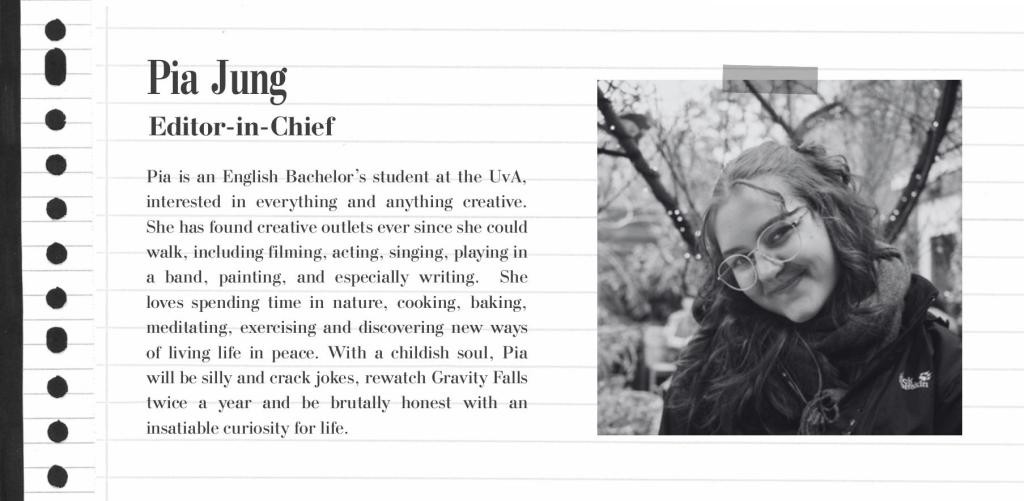
Written by Pia Jung


Leave a comment