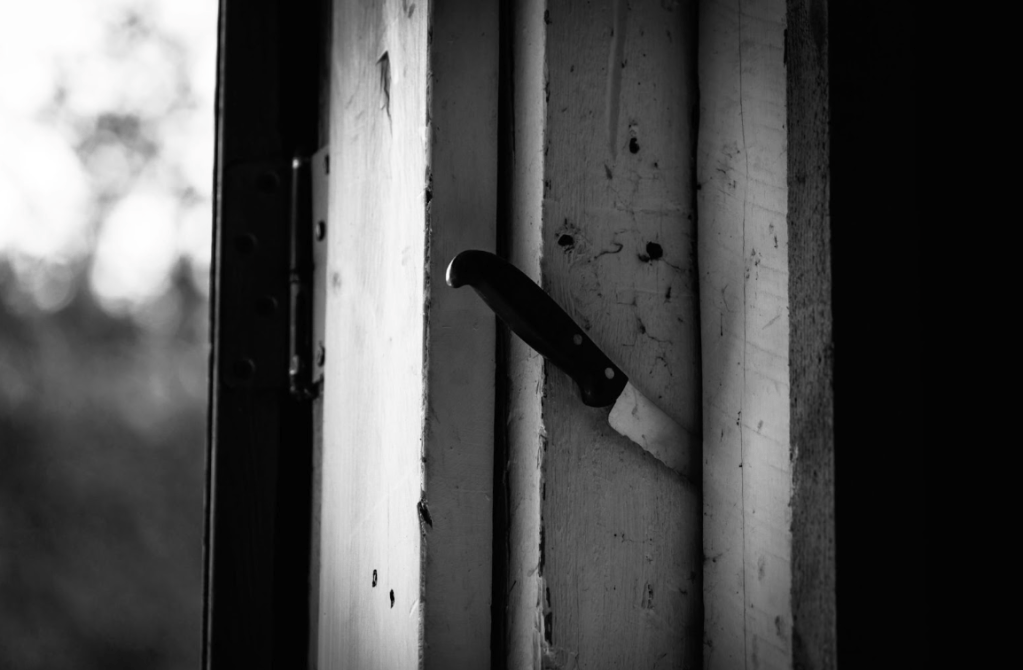
I have a list of irrational fears; there are a lot of small things on there, like ladybugs, the bottom of a pickle jar, and the germs on buttons in public spaces. An irrational fear I do not have is being murdered by a serial killer. I know the chance is too small for it to happen to me. The acts of these killers are very brutal, which is why we hear about them, but this doesn’t mean that they are common. Though, as a woman, I am occasionally scared of the men I pass on the street. But what about the women walking by? I am not an expert on serial killers, but if you’d ask me to name you some, I’d probably start with Ted Bundy, Jeffrey Dahmer and Charles Manson.
A short while ago I read the novel A Certain Hunger by Chelsea Summers. It’s a book about a female food critic who suddenly wants to broaden her taste palate and starts killing men with whom she has shared the bed in order to taste a piece of their flesh. This novel made me think about female serial killers in real life, and how little I know.
Last year, there was a news report about a woman from Australia, called Erin Patterson, who killed her family in law by serving them a beef Wellington laced with lethal mushrooms that she must’ve handpicked in nearby towns. There was Mary Ann Cotton, who was known as Britain’s first female serial killer (but she was active in the mid-19th century, so I highly doubt that she was actually the first) and Lucy Letby, who killed eight babies in the hospital while working there as a nurse. But without looking them up, I would have no idea what their names were.
Ultimate feminism
Many people claim to be feminists, but when it comes to this topic, we are still stuck on the idea that only men could be violent offenders. How come we are so good at trying to show that men and women are equal, but still assume that when someone is murdered, this is done by a man? Of course we do not wish to think that anyone could act this violently, but we know that it happens, even if it is very rare, and somehow we always think of men as the offender.
When we take the statistics, it probably doesn’t surprise many that it is true that a larger percentage of murders is committed by men. When looking at numbers given by the Dutch bureau for statistics, CBS, there is a stark difference between violent crimes committed by men and those committed by women, with over 28,000 male registered suspects for violent crimes committed last year in the Netherlands, and nearly 4,000 female registered suspects. In another study it is found that of all serial killers, 16% are women. Even though that number is very low in comparison to the divide of the men and women in the world, which is almost equal, this would still mean that out of the 2675 people that got murdered in the Netherlands in 2025, 428 were murdered by a woman, (if we follow the thought that 16% are female). Though, in perspective this is not a high number, it is a high number overall if there still is the assumption that all killers are male. It is important to note that these numbers are based on murders that are known and investigated, but the numbers of female suspects could be much lower than the actual number of convictions. Who knows how many women are not on the suspect list because of their gender? Is it not a feminist thought to think that there could be more women capable of doing the same thing as men? Of course I do not support murderers and serial killers of any kind, regardless of their gender, but I do find it strange that we see women as less capable.
Women in media
I recently started watching the 2018 series Sharp Objects and when it was suggested in episode 2 that the person behind the murders in a small town might be a woman, the officer’s response was immediately “this wasn’t a woman”. Another said it was words, with which women kill, but that was meant figuratively. Similarly, when in The Vampire Diaries season 3, episode 16 the protagonist vampire Stefan is talking about a serial killer who was never identified, he mentions that they checked all men in the town, but “it probably never occurred to them that a woman could have done it”, and in a later conversation about the same serial killer, Stefan’s brother Damon snootily remarks that it could never have been a woman, to which one of the original vampires Rebekah responds “That’s a bit sexist. A woman could easily kill a man. With the right motivation” (spoiler: she was right. It was a woman who did it).
Not too long ago, I also watched the series Sweetpea about a young woman who starts killing people, more specifically men, partially because they can be frustrating at times, but mainly because they hold so much more power over women. And in the recent movie Send Help with Rachel McAdams and Dylan O’Brien, it is also a woman who goes on a killing spree, primarily because she wants to gain more power over the men who are dominating the work field, and the only way to do this is by eliminating them, and whoever else stands in her way.
While writing this article I came across a woman some of you might be familiar with (though, I wasn’t yet), called Aileen Wuornos. Her case apparently was a very well-known one, and she was the only woman I saw between the headshots of many famous killers. As most serial killers do, she had a traumatic childhood full of abandonment and abuse. When she had to survive on her own, she turned to prostitution and armed robberies to sustain herself. When she was the age of thirty-three, she killed her first victim, a client. This murder was followed by six more over the course of a year. All her victims were men, and all of them were customers. Wuornos claimed all of it was self-defense against sexual assault. This case drew much attention to the public, partly due to the gender of the offender and that of her victims, but also because of her abusive childhood and claims of her victims being sexual assaulters.
When I read Wuornos’ story, I began to wonder about the motives of female serial killers and their brutal deeds. In sociology class in high school, I learned about the underlying traumas criminals often have, and how this has an influence on their behavioral development. Although Wuornos’ story gained much public attention, her killing pattern, behavior and choice of victims were unequal to those of previously studied female serial killers, however, they do align with the motives found in research on female serial killers.
Feminist criminology
Wuornos’ case opened up the discussion about female and feminist criminology. A term priorly hinted at by my boyfriend before I started doing my own research, who knows more about criminology than I do. While it sounds like another assumption and stereotype to say that women more often act out of response to prior abuse, it is not an irrelevant thought. Feminism arose from the unequal ways women were and are treated, and the patriarchy is what caused women to experience more abuse in the first place. These traumas are often what leads to the distortions in women that cause them to act in criminal ways. Of course this doesn’t mean that every woman with an abusive childhood ends up being a serial killer, it also is not an excuse for murder, but it can be a trigger to a very small group of women. Additionally, trauma is also seen as a trigger in male serial killers.
But aside from these traumatic childhoods that partly explain why female serial killers act in the ways they do, as traumas certainly do not make you a serial killer nor is it a valid excuse, I will have to dive into the biology of women and men. A course I dropped in high school as soon as I could, but hopefully I am not completely unable to understand what biology means in relation to this topic.
What is often seen in male killers is that they act out of sexual motivation, while for women it is often for gain and convenience that they kill. It is undeniable that testosterone and androgen strongly play a role in the violent behavior of men, as well as grey brain matter in regions linked to empathy and emotion regulation. In a study from 2019 about the differences between the sexes of serial killers there is a theory about hunters-gatherers. Because it is estimated that humans have lived as hunters-gatherers for 95% of the history of our species, it is said that similar physical, social and environmental elements are still active and our current human behavior still reflects these conditions. In this scenario, the male serial killer is seen as a hunter and the female serial killer as the gatherer. Under these conditions, this is what makes the male kill strangers, stalk them and travel far to hunt and kill their target, the female kills those around them, gathering victims that they are familiar with, while staying in one place. This theory partly speaks to the motivation of killing and the ways in which women kill from a scientific point of view, and in a later study solely focused on female serial killers other patterns behind their murders were identified.
The list of the most prominent patterns of behavior, victims and killing methods of female serial killers therefore goes as follows. Women’s motivation is most often financial gain. As priorly said, women often target people they already know, far more likely than they are to stalk and kill a stranger, and they are also more likely to target vulnerable people, such as elderly people, ill people or children. And lastly, the most common killing method among female killers is poisoning.
Before I continue I think it’s important to clarify that regardless of gender and the issue of feminism, murder cannot be merely explained by these motives or people’s traumatic experiences. The existence of serial killers is extremely rare and even though they exist and are partly shaped through their traumas, this does not mean that trauma is a direct factor of their behavior. Most people do not get the urge to hurt people and end their lives because they have had scarring experiences.
Famous female serial killers
Because I think it is interesting to learn about the different women in this field, I wanted to look into some specific serial killers. My loving partner reminded me of a story I had heard once before but forgotten about a Dutch female serial killer in the 19th century. Her name was Maria Swanenburg. She was known as a helpful and active woman in the community, but meanwhile she would poison her neighbors with arsenic (rat poison) and subsequently claimed the money of those people’s life insurances (that she herself had set up). Swanenburg had grown up with an alcoholic mother who didn’t really care for her children (which fits the theory of female serial killers) and later had many children herself. Because she continuously lived in poverty, she used the money to sustain herself and her children. She ended up murdering at least 27 people and poisoned many more, of whom no one ever recovered entirely.
Another woman I came across while writing this article is Dorothea Puente. Even though she was only in her fifties, she is referred to as an ‘elderly killer’, with a grandmotherly appearance. Her story is a bit similar to that of Swanenburg. In the 1980’s, Puente presented herself as a sweet lady who ran a boarding home, but simultaneously committed fraud, theft and forgery while she slowly poisoned her tenants and subsequently buried them in her backyard. Her victims were vulnerable people (mentally ill, disabled or elderly) with no close family to notice their disappearance. Then, after they were disposed of, she would cash in the victim’s security checks by pretending they were still alive. Her methods fit the descriptions of female serial killers very well; she targeted vulnerable people that she already knew and used poisoning as a weapon.
Lastly, a killer that I found intriguing (if that’s the right word for it…) is Juana Barraza, who was a former female wrestler. She was also known as the ‘little old lady killer’, because she wound up murdering sixteen elderly women over the course of seven years. Instead of many other female killers, Barraza did not know her victims, and neither did she use poison to kill them, but she used objects, such as telephone cords, to strangle the women. She did, however, fit the theory of motives, because she grew up in an abusive household, with an alcoholic mother who gave her away to a man when she was twelve, and abused her. It is believed that she acted out her harbored rage against her mother on these women.
Passing it on
Even though my plan was to write a piece about ultimate feminism where I show that women are equal to men, even when it comes to things we dislike, it has taken a bit of a turn, because it really does seem to be that men act differently when it comes to violence and crime. But I still believe that there are more female killers than those that are included in the statistics, mainly because if I have learned anything about the world is that it is built for men, and if most research for medicine is only tested on men, then I do believe that there is a possibility that there are many fields where women are being overlooked, even if it is in the unpleasant one of murder.
So, with this piece, my message to you is ‘know their names!’ Not for their great actions, because, as much as you can love women, I think we should acknowledge that being a woman does not instantly make you a good person, especially not if you end up murdering many individuals. What these women did was horrific, and there is no denying that. And having traumas does not act as an excuse for these heinous acts. One should not have to expect this kind of violent behavior from anyone. But next time when the topic comes up and someone starts speaking about Bundy, Dahmer or Manson, mention Wuornos, Swanenburg or Puente, because women should not be shoved aside as overly emotional damsels who simply strike out, but we should acknowledge that women can be equally violent to or even more so than men. Maybe not always with the same intentions, but perhaps we should stop acting like a woman can’t be intimidating or scary. You might not have to start fearing the women you pass while sitting in a metro, or those that walk behind you when you’re walking home in the dark, but you should never underestimate the power of the women close to you.
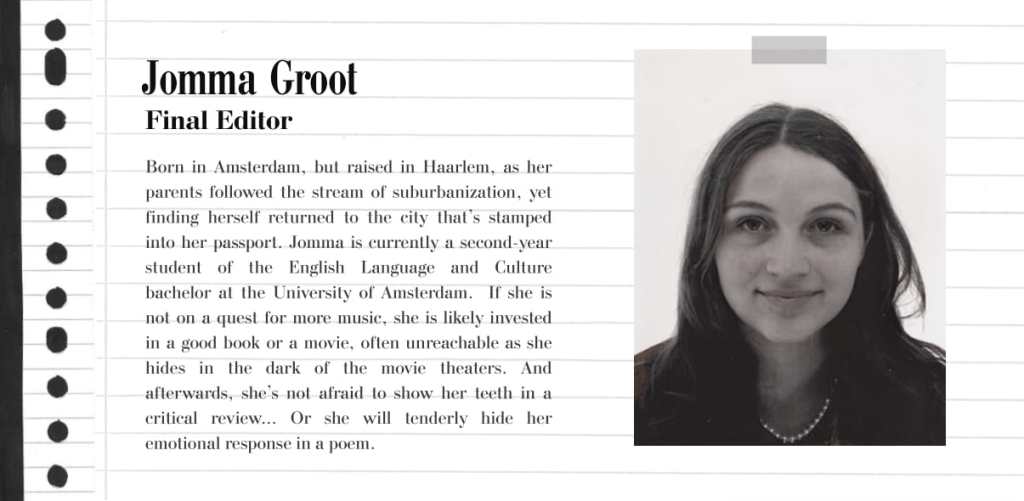
Written by Jomma Groot
References:
Bankston, C. L. (2023). Aileen Wuornos. EBSCO. https://www.ebsco.com/research-starters/women-s-studies-and-feminism/aileen-wuornos
BBC News. (2020, November 12). Chester hospital baby deaths: Nurse Lucy Letby in court. https://www.bbc.com/news/uk-england-merseyside-54913047
CBS Statline. (n.d.-a). https://opendata.cbs.nl/#/CBS/nl/dataset/85655NED/table?dl=D2DD9
CBS Statline. (n.d.-b). https://opendata.cbs.nl/#/CBS/nl/dataset/85655NED/table?dl=D2DDA
Damen, J. (2017). Object uit een Leidse collectie. Universiteit Leiden. https://www.universiteitleiden.nl/nieuws/2017/10/object-uit-een-leidse-collectie
Harrison, A., & Hughes, M. (2019). Sex Differences in Serial Killers. Evolutionary Behavioral Sciences, 13(4), 295–310. https://doi.org/10.1037/ebs0000157
Harrison, M. A., Murphy, E. A., Ho, L. Y., Bowers, T. G., & Flaherty, C. V. (2015). Female serial killers in the United States: means, motives, and makings. Journal of Forensic Psychiatry and Psychology, 26(3), 383–406. https://doi.org/10.1080/14789949.2015.1007516
Konrad, M. (n.d.). Dorothea Puente: High Functioning Psychopathy. Dark Minds, Deadly Deeds: Unmasking Serial Killers. https://csi.pressbooks.pub/darkmindsdeadlydeeds/chapter/dorothea-puente-high-functioning-psychopathy/
Peterson, J. R., & VanderPyl, T. (n.d.). 8.3 Feminist Criminology. Introduction to Criminology: An Equity Lens. https://openoregon.pressbooks.pub/criminologyintro1e/chapter/oo8-3/
Sherrin, H. (2023). Britain’s First Serial Killer: Who Was Mary Ann Cotton? History Hit. https://www.historyhit.com/who-was-mary-ann-cotton/
Tuckman, J. (2017, November 27). Little Old Lady Killer handed 759 years in a Mexican prison. The Guardian. https://www.theguardian.com/world/2008/apr/02/mexico
Turnbull, T. (2025, July 7). Australian woman guilty of murdering relatives with toxic mushroom meal. https://www.bbc.com/news/articles/cdezzxnn7kjo
Tutella, F. (2023, February 9). “Just as Deadly”: Inside the mind of a female serial killer. Penn State University. https://www.psu.edu/news/research/story/just-deadly-inside-mind-female-serial-killerWang, J. (2019, July 23). Scientists studied the brains of more than 800 prisoners. Here’s what they found. University of Chicago News. https://news.uchicago.edu/story/scientists-studied-brains-more-800-prisoners-heres-what-they-found
 Writer's Block Magazine
Leave a comment