I’m walking up the stairs to the train platform, trying to hide being out of breath, attempting not to wince from the pain it is causing in my chest and my sides. I used to joke about that a couple of years ago, being exhausted just from walking the stairs in school. Now, I am mainly in pain and embarrassed. There’s a lot of that lately; embarrassment. I’m embarrassed by how little I can do and how little I can be physically active. I keep thinking of how easy it would be for people to say that I should work out more, then at least I would keep up my stamina a bit. I don’t blame people for thinking that, because sometimes I even think it myself.
New Year’s Eve of 2026 marked my fourth year anniversary with my Chronic Fatigue Syndrome. I don’t know if it sounds like a long time, or if it sounds much shorter than it actually felt. Sometimes it feels like I am aging without actually experiencing all the years passing. I still remember reading about a girl with the syndrome when I was only recently diagnosed. She talked about battling with chronic fatigue for seven years already. When I read that, I cried, thinking of how I might meet that same fate. Simultaneously, it felt like an unrealistic thought, that I would still be chronically fatigued after so many years. Something like that just doesn’t happen to someone so young. Nowadays, it no longer sounds so improbable to me. I mean, I’m already more than halfway there.
I will briefly try to explain to you what this condition is, in case you’re not familiar with the term. Chronic Fatigue Syndrome, also known as Myalgic Encephalomyelitis (but I can never memorize that name), mainly means always being out of energy. I just woke up one morning, not feeling recharged after a night of sleep (which I did not think too much of, as it was New Year’s morning), but then my energy just never returned. Since then sleep no longer makes me feel (fully) rested. Often when I wake up, it feels like I have had no sleep at all. Aside from being tired, it also comes with a lot of side effects, like headaches, having trouble focusing, dizziness, eyes that feel like they are on fire, pain in my limbs,not being able to stand for too long, being overly sensitive (I never used to cry as much before as I do now), and the list goes on and on. If you have ever gone a long time without sleep (like pulling an all-nighter), you might recognize some of these effects. Your body becomes weak and has to work harder and harder to process everything.
With all of these symptoms, I still belong to the lucky ones affected by the condition. ME/CFS can be divided into four different degrees; mild, moderate, severe and very severe. In my case I have something between the mild and moderate degree. This means I am limited in my everyday activities, need several moments a day to rest, and I am often sensitive to sounds and light. In my first year I don’t think I had the curtains in my bedroom open once. The severe cases barely leave their house, use a wheelchair to get around and also spend most of their time in their rooms with their curtains closed, because the light is too overstimulating. This could be compared to when you’re travelling with public transport during rush hour. Trying to get home from a long day of work, but not being able to sit down, hearing too many people speak at once, being pushed around and smelling someone’s tuna sandwich all at the same time. When a person with ME/CFS leaves the house, this is what it constantly feels like. Even when the sound is merely one person talking it can sound like they’re speaking through a megaphone, and even the tiniest bit of daylight feels like your phone’s brightness is turned all the way up in a dark room. And lastly, there is the group of people with very severe ME/CFS that cannot even leave the house, nor their bed.
For many people, ME/CFS is part of PAIS: post-acute infectious syndromes. Some people develop this chronic condition after being infected with a virus. Due to post-covid, which is a condition that shares many of the symptoms with ME/CFS, PAIS, as a collective term, is starting to receive acknowledgement and is more frequently being talked about in the media. Demonstrations about PAIS in the Netherlands have led to passing motions in the House of Representatives for expanded research, and easy access to a social welfare system to financially support the people who can no longer work to sustain themselves. Although I am glad that the government is taking action, I am not certain where I fit into these scenarios. I do not have PAIS. No causes have been discovered suggesting the onset of my condition. Whenever I tell people I have this chronic fatigue, one of the first questions I get asked is whether I have had covid. I have, but that was only after I already had my chronic fatigue symptoms. And yes, I am certain of this, because I have had my blood tested enough times to see if there are traces of an earlier infection. Sometimes it can be really frustrating when people constantly want to try to find a cause for my condition. Just because you recently read an article about something, doesn’t mean that you are now a professional doctor who can solve the question that remains unanswered after four years. In all honesty, I have given up on finding the cause a long time ago. I am okay with not knowing what caused this condition, because the focus now lies on what can be done to make living with the symptoms easier. That’s the most I can do, because up until now, there has yet to be found a cure.
Occasionally I feel embarrassed when I tell people that my chronic illness just means being very tired. I am scared people will simply think that I am weak. Somehow the fact that I don’t have it to a severe degree makes me sound even more dramatic. Being tired does not seem like the worst disease anyone could have, nonetheless it is a disease that alters your life. Besides, it is not just being tired. It is all of the things I mentioned above: the pain, the brain fog and the weakening of the body. The worst part about this illness is that time passes, years do, and all the while I am only ever partly awake.
Initially, I used to be a very passionate person. In many ways, I still am. There are way too many things that I want to do that I used to be able to, but no longer am. For example, I always wanted to be a musician. I used to write about 3 songs a week on average. Now I write about 5 songs total in a whole year. I am currently studying English, and reading books was one of my biggest hobbies, but now I read about half as many books as I used to before. I still want to read all the classics (I’m also supposed to read a book a week), but my lists keep piling up, and my energy keeps dwindling. Yet I often do a lot more than my body can actually handle because I’m always in way over my head. Whenever I let my bucket overflow, I feel the results of it in the following days. It depends on how intensive the activity was and how long it takes for me to recover to the state I was in before, but it is not uncommon for it to take an entire week to feel ‘normal’ again.
Aside from feeling the effects of the disease myself, I also notice that it has an effect on others. I can tell when people are disappointed because I cannot do certain things. Normal day things can be very exhausting to me, especially when they take physical effort. Skiing, ice-skating, climbing, and canoeing are all things that people have asked me to join them in doing, but of all those I immediately know they are impossible for me. But sometimes even meeting up, going for a walk, or responding to messages can be too intensive. I know very well that if I do these things, it will take me a long time to recharge. My battery is so limited that the effects can also be felt by others around me in my absence.
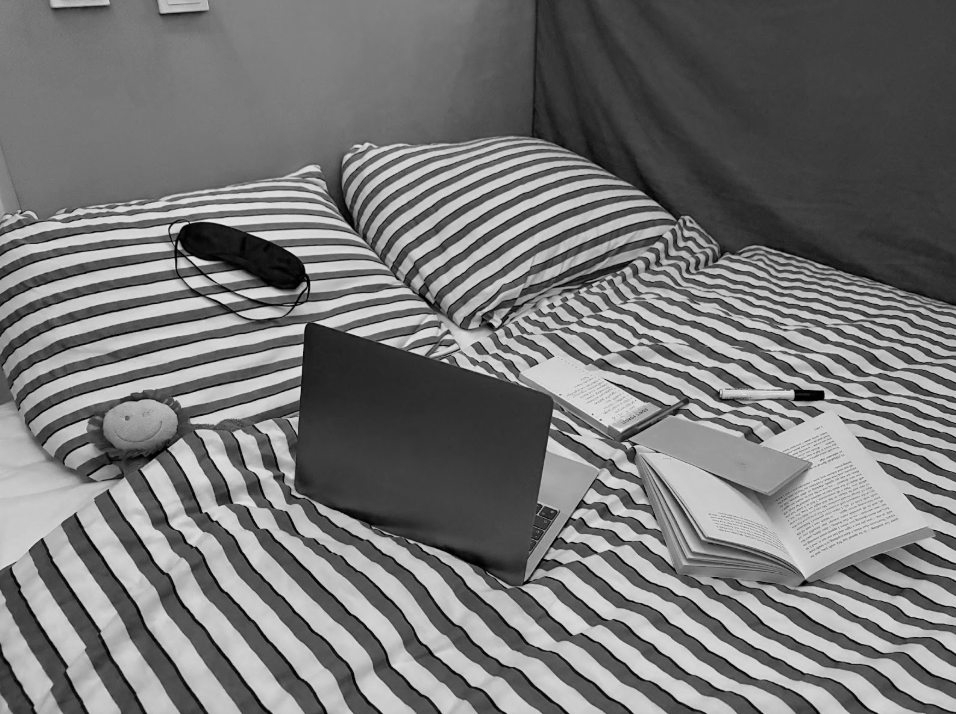
It’s easy to hide that writing this article has repeatedly made me break down emotionally, to hide behind my laptop, the trembling hands that are typing these words. I try my best to keep my illness veiled. Clearly, it is not a secret that I have it, but it remains largely unnoticed by surrounding people. Sometimes I fall asleep when I’m meeting up with friends, but I would never show the tears this chronic condition leaves dripping over my cheeks. Even writing this article has made me feel the effects. I don’t have the energy to write perfectly, and I don’t have a clear head to write exactly what I want to say. All of the things I do are jobs done half-well. I guess that by writing this article, I want to show people what it is really like to have ME/CFS, and in a way, to reveal what usually remains hidden from the public. To prove that it’s not only fatigue.
Despite all of the limits this illness has given me, I know I can be proud of myself for what I am achieving while being chronically ill. I am in my second year of a full-time university programme, and before this I have also completed one year at a university of applied sciences. I even finished my last year of high school with my illness. Although I don’t always feel fully content with my accomplishments, especially when I am comparing myself to my classmates, I still get to realize that I am doing something very impressive. Even these words on your screen are proof that I have successes I can be proud of.
Although I could keep talking about this topic for much longer, I will keep this article somewhat short because I just received a notification: ‘low battery.’
P.S. I can only really share my own experience, but if you’re reading this as someone who also has ME/CVS, feel free to reach out to me and maybe we can exchange our experiences… If you have the energy 😉
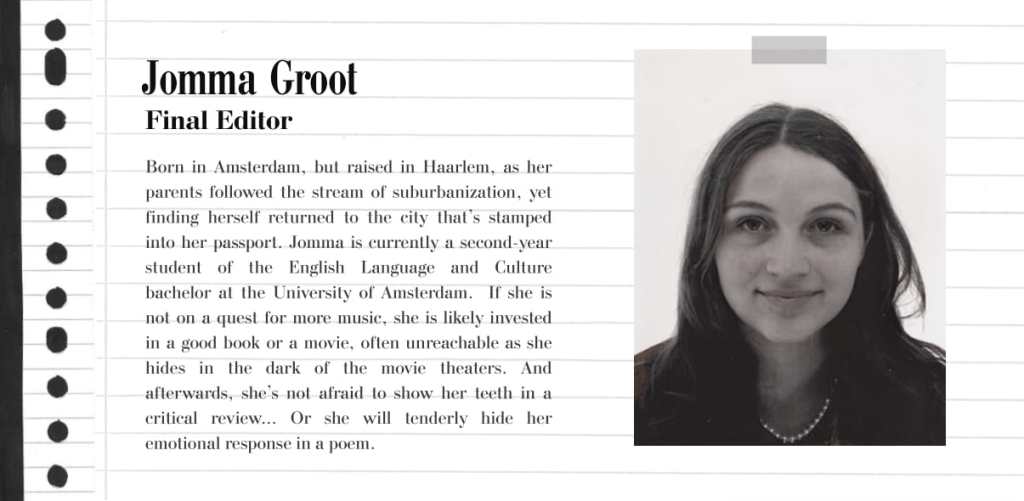
Written by Jomma Groot
References:
Debat over postcovid. (n.d.). Tweede Kamer Der Staten-Generaal. https://www.tweedekamer.nl/debat_en_vergadering/plenaire_vergaderingen/details/activiteit?id=2025A07673
Wat is ME/CVS? (n.d.). mecvs.nl. https://mecvs.nl/over-me-cvs/wat-is-me-cvs/
What causes ME/CFS causes. (2024, May 10). Myalgic Encephalomyelitis/Chronic Fatigue Syndrome. https://www.cdc.gov/me-cfs/causes/index.html
 Writer's Block Magazine
Leave a comment