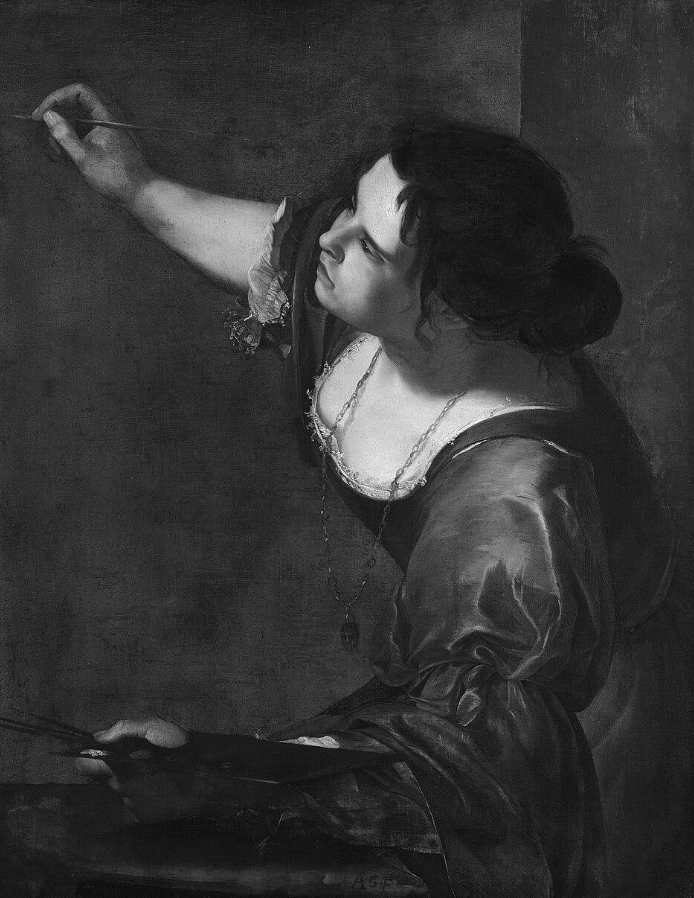
“Being born a woman is my awful tragedy. From the moment I was conceived I was doomed to sprout breasts and ovaries rather than penis and scrotum; to have my whole circle of action, thought and feeling rigidly circumscribed by my inescapable femininity. Yes, my consuming desire to mingle with road crews, sailors and soldiers, bar room regulars — to be a part of a scene, anonymous, listening, recording — all is spoiled by the fact that I am a girl, a female always in danger of assault and battery. My consuming interest in men and their lives is often misconstrued as a desire to seduce them, or as an invitation to intimacy. Yet, God, I want to talk to everybody I can as deeply as I can. I want to be able to sleep in an open field, to travel west, to walk freely at night…”
Sylvia Plath, The Unabridged Journals of Sylvia Plath
I understood from a young age that I am seen as a woman before I am seen as a person. Not long after that, having taken my first steps into adolescence, I had made up my mind: being a girl was my divine retribution. Girlhood was an endless maze of expectations, restrictions, and punishments. I felt imprisoned by gender, and, as luck would have it, all of my escape plans failed miserably. In time, I found my way out, but the path to getting there was anything but straightforward.
Everything we do is always in negotiation with a patriarchal society. As Judith Butler says in Undoing Gender, gender “is a practice of improvisation within a scene of constraint.” In theory, I can do as I please. In reality, social norms determine how my body and behaviour are interpreted, and I am left to deal with the consequences. So, can I really do as I please? Freedom is inherently conditional. As women, exercising the liberties we do have often comes with dreadful repercussions. To make matters worse, the severity of these consequences is shaped by the various identities that intersect with our gender, such as race, class, sexuality, and nationality.
You and I both know that the patriarchy is real, painful, and exhausting, so I won’t drag us through its entire curriculum again. I simply want to focus on the absence of freedom. Plath’s journal entry articulates the longing for freedom inside me far better than I ever could. By no means is womanhood a monolithic experience, but her desire for liberation ought to resonate with many women across time and space. Whether it is presented as Cyndi Lauper’s Girls Just Want to Have Fun or Simone de Beauvoir’s The Second Sex, the essence remains the same: women desire freedom; we too want to experience life to its fullest. It’s not a groundbreaking idea by any means, but it bears repeating when the struggle for women’s liberation is far from over. Even the little liberty we have exists within structures of constraint, and I confess there was a time that this knowledge ate me alive. Lamenting the fate of girls and women everywhere, I wallowed in my misery. My own efforts of resistance against the patriarchy felt futile. Thoughts of a past, present, and future in this patriarchal hellhole only worsened the hopelessness and powerlessness I harboured inside of me. A tale as old as time: the patriarchy drained the life out of me.
Thankfully, those days are long gone, but I still feel for the girl I was back then. I am writing this for her and for any girl or woman who feels as if being a woman is her “awful tragedy.” I don’t blame you for feeling this way. It’s only human of us to get sick of a sick society. I will not dismiss your concerns and struggles, but I hope I can help you walk the path of womanhood with a bit more ease, warmth, and vigour. It took more than a decade for me to feel even remotely settled in my womanhood, and still, there are days I feel as if the patriarchy weighs me down. Most days, however, I manage pretty well. I do feel anger and sorrow, but, above all else, I feel alive, hopeful, and capable. These days, I am able to shift my focus to the forms of freedom that are accessible to me, and I let it be my refuge and resistance. This, for me, more than anything else, is the freedom of the mind — emotional and intellectual resistance. Your mind is your own. Do not surrender it to anyone else.
Acknowledging the limitations of freedom within the patriarchy does not necessitate surrendering to pessimism, hopelessness, or apathy. In our struggle for liberation, I want us to keep our spirits alive. I do not want this world to dim the light that you are. I do not want it to rob you of your joys and hopes. There is so much this world inevitably takes from you, but I hope it will not be your spirit. I want you to keep hold of what is yours. I want you to cultivate a mind that the patriarchy cannot colonise.
It is easier said than done. Do it anyway. Reject any and all stories told by society that make you feel small. You are greater than the world deems you to be, and this is a truth worth remembering. As a woman, it’s awfully convenient to hate yourself. The world makes it easy. Against all odds, let go of the self-hatred you have made into a home. Do not derive your self-worth from a sick society; it can only make you ill. Give yourself unconditional love and compassion. It is your birthright. Embrace your body and personality. Feel desire, pleasure, ambition, anger, sadness. Abandon any shred of shame or guilt. Instead of adopting the patriarchal interpretations spoonfed to you since birth, reframe and reclaim your story and the world around you, even when it’s hard. Especially when it’s hard. Read widely. Think critically. Question incessantly. Write. Make art. Have ideas. Push your imagination beyond the boundaries imposed on you. This is your mind, so carve it in your own image, and do not let it become a mirror of the patriarchy. Forge your worldview, values, and sense of self on your own terms, not by society’s poisonous playbook. Preserve a mind that refuses defeat and conquers subjugation.
Life provides us with these little liberties, and I cherish them greatly. I hope you can too. While the liberation of women remains a pressing priority, I believe we cannot afford to neglect our minds as we strive and struggle for a better tomorrow. I long for the day all women can be truly free, but until that day arrives, perhaps the mind can be our first threshold of freedom; it is far from the final step, yet it is the one that keeps us alive, spirited, and capable of imagining the liberation still to come.
Written by Emel Peksöz
References
Butler, Judith. Undoing Gender. Psychology Press, 2004.
Gentileschi, Artemisia. Self‑Portrait as the Allegory of Painting (La Pittura). c. 1638–1639. Google Arts & Culture, artsandculture.google.com/asset/self-portrait-as-the-allegory-of-painting-la-pittura-artemisia-gentileschi/wwENmp3dXLo4kg
Plath, Sylvia. The Unabridged Journals of Sylvia Plath. Vintage, 2000.
 Writer's Block Magazine
Leave a comment